Novodevichy Monastery stands as a majestic testament to Russia’s rich history, its ancient walls echoing stories of power struggles, exile, and deep spiritual devotion. Founded in the early 16th century, this historic site has sheltered royal women, influenced political destinies, and preserved cultural heritage through centuries of upheaval. Its remarkable architecture and sacred icons invite visitors to reflect on Russia’s profound past, offering a unique glimpse into the intricate relationship between faith, politics, and culture that continues to resonate today.

Historical Significance of Novodevichy Monastery
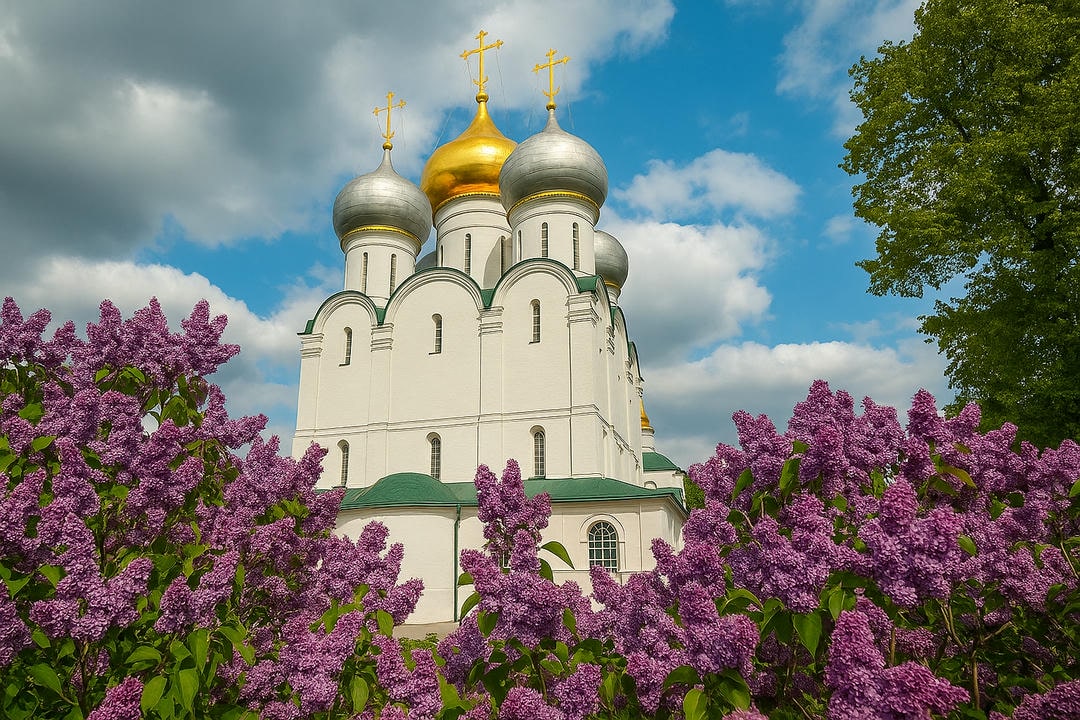
Founded in 1524 near the Moskva River, Novodevichy Monastery quickly became one of the most important religious and cultural centers in Russia. Throughout its nearly 500-year history, it has witnessed pivotal events that shaped the nation. The monastery endured invasions such as the Polish incursion during the Time of Troubles and Napoleon’s campaign in 1812, yet it emerged repeatedly restored and renewed, symbolizing Russian resilience and national spirit.
Beyond its religious role, Novodevichy has long represented the endurance of Russian identity. Even after the Bolshevik Revolution, when many religious institutions were suppressed, the monastery managed to preserve its traditions and services. Today, it stands not only as a place of worship but also as a monument to Russia’s layered history—an emblem of spiritual strength intertwined with political power.
Queens in Exile at Novodevichy Monastery
Novodevichy Monastery, one of Moscow’s most revered religious sites, served not only as a spiritual center but also as a place of enforced retirement for noblewomen whose roles in dynastic politics had ended. Among these women, Solomonia Saburova and Tsarevna Sophia Alexeevna stand out for their poignant stories of sacrifice and resilience.
Solomonia Saburova, wife of Grand Prince Vasily III, faced a heartbreaking fate. After years of marriage without producing an heir—a critical issue for the continuation of the Rurikid dynasty—she was compelled to take monastic vows and live within the monastery walls. This act was not just a personal tragedy but also a state decision reflecting the importance of securing a legitimate heir for Russia’s future. Despite her removal from court life, Solomonia remained a figure of deep respect, remembered for her dignity and faith during difficult times.
Decades later, Tsarevna Sophia Alexeevna found herself confined to the same monastery under far different circumstances. Following her unsuccessful attempt to rule as regent and her rivalry with Peter the Great, Sophia was placed under house arrest at Novodevichy. Her years in captivity were marked by a quiet endurance and spiritual reflection. Sophia’s story underscores the monastery’s dual role as both a refuge and a prison for royal women caught in the currents of political change.
The histories of Solomonia Saburova and Tsarevna Sophia reveal Novodevichy Monastery’s unique place in Russian history—not only as a sacred space but also as a setting where women of noble birth navigated complex intersections of faith, duty, and power. Their lives remind us of the personal sacrifices behind the grand narratives of Russia’s past.
Interesting Facts:
- Novodevichy Monastery is recognized as a UNESCO World Heritage site for its architectural beauty and historical significance.
- The monastery’s walls have witnessed many key moments in Russian history, including serving as a fortress during times of conflict.
- Solomonia Saburova was canonized by the Russian Orthodox Church as a symbol of pious endurance.
- Tsarevna Sophia was known for her intelligence and cultural patronage even during her confinement, supporting scholars and artists discreetly.
These stories highlight how Novodevichy Monastery preserved not only spiritual traditions but also the memory of noblewomen whose lives were deeply woven into the fabric of Russia’s heritage.
Boris Godunov’s Rise and Influence at the Monastery
The Novodevichy Convent, one of Moscow’s most important religious institutions, had long served as a place of confinement for royal women, including widowed tsarinas and noblewomen who were often forced into monastic life. However, beyond its role as a spiritual refuge and prison, the monastery played a crucial part in the political landscape of Russia during a time of dynastic uncertainty in the late 16th century.
Following the death of Tsar Fyodor I in 1598, the Rurik dynasty came to an end, creating a power vacuum that threatened to plunge Russia into chaos. Boris Godunov, Fyodor’s brother-in-law and a powerful boyar, was initially acting as regent but sought to secure his own position as tsar. The Novodevichy Monastery became a critical stage for this transition. Within its fortified walls, Godunov gained the support of influential boyars and clerical figures who recognized his leadership abilities and viewed him as a stabilizing force amid the looming succession crisis.
It was at the Novodevichy Monastery that these political intrigues culminated in Boris Godunov’s formal claim to the throne. His accession was solemnized in the Smolensk Cathedral, the convent’s main church, symbolizing both religious endorsement and political legitimacy. This event marked the official beginning of Godunov’s reign as Tsar of Russia.
Godunov’s rule brought about significant changes to the monastery itself. Under his patronage, Novodevichy saw extensive construction projects and renovations that enhanced its architectural grandeur and fortified its defenses. Notably, chambers were built within the convent specifically for Tsarina Irina Godunova, Boris’s wife, emphasizing the monastery’s dual role as a spiritual sanctuary and a center of political power. These enhancements not only reflected Godunov’s personal devotion but also served to strengthen the monastery’s status as an important symbol of the state’s authority.
Throughout his reign, the Novodevichy Monastery remained a focal point of religious and political life in Moscow, intertwining Boris Godunov’s legacy with the convent’s history. His rise to power, solidified within these sacred walls, highlights how religious institutions could influence and legitimize political authority during one of Russia’s most turbulent periods.
Architectural Highlights and the Iconic Bell Tower
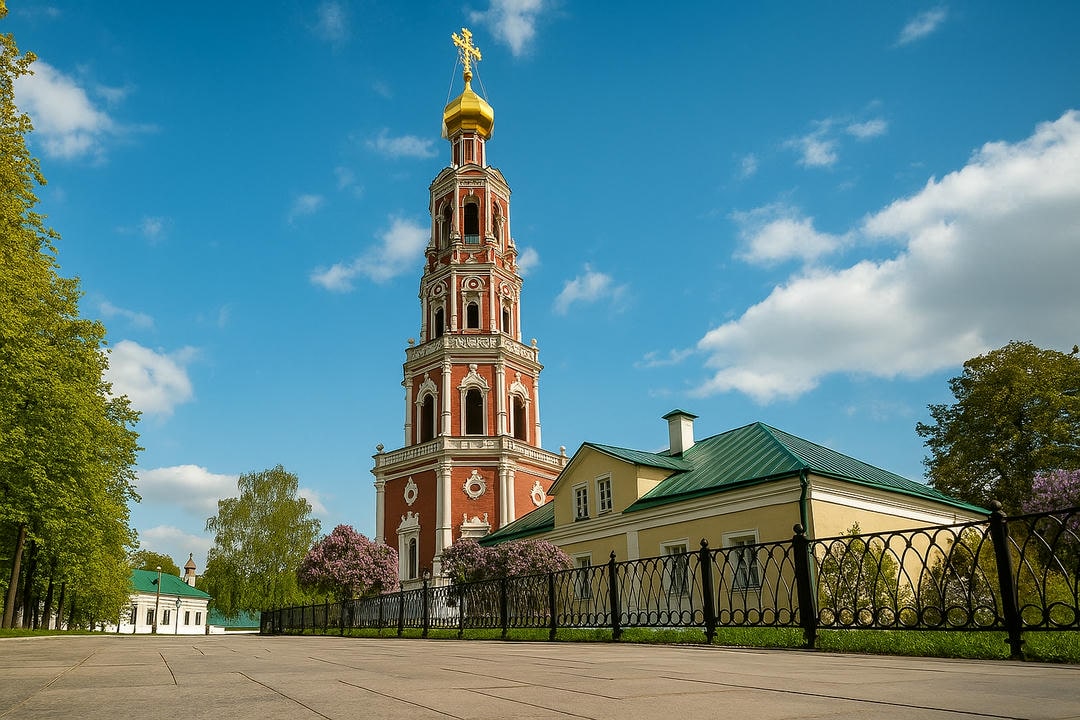
Dominating the skyline of the Novodevichy Monastery complex, the bell tower stands as a crowning example of Russian Baroque architecture, a style that flourished in the late 17th and early 18th centuries. This magnificent structure rises to an impressive height of 72 meters (approximately 236 feet), making it one of the tallest bell towers in Moscow and a prominent landmark visible from many parts of the city.
The bell tower’s architecture is characterized by its elegant verticality, organized into six distinct tiers. Each tier is decorated with intricately carved white window trims and ornamental details that create a rhythmic pattern, balancing robust structural elements with delicate decorative motifs. The white stone contrasts beautifully with the tower’s red brickwork, a hallmark of Russian ecclesiastical design from the period. The craftsmanship reflects a fusion of traditional Russian forms with Western Baroque influences, evident in its dynamic shapes and elaborate ornamentation.
Beyond its aesthetic appeal, the bell tower carries profound religious symbolism. It functions as a spiritual beacon, its towering presence designed to inspire worshippers to look upward, symbolizing a connection between earth and heaven. This vertical reach is meant to elevate the soul, reinforcing the monastery’s role as a place of contemplation and prayer. The bells housed within have historically played a vital role in monastic life, marking the hours of prayer and important religious ceremonies.
The tower’s significance was recognized by notable figures in Russian architecture, including Vasily Bazhenov, one of the country’s leading architects of the 18th century, who praised its design for combining sacred artistic expression with architectural innovation. His admiration underscores the bell tower’s importance not only as a functional structure but also as a masterpiece representing the cultural and spiritual heritage of the Novodevichy Monastery.
Today, the bell tower remains an enduring symbol of Moscow’s rich religious architecture, attracting historians, architects, and visitors alike who seek to appreciate its beauty and historical significance within the broader context of Russian Orthodox tradition.
The Revered Smolensk Mother of God Icon
The Smolensk Mother of God icon, while deeply rooted in Byzantine tradition, holds a unique and profound spiritual significance within the Novodevichy Monastery in Moscow. This icon is one of the most venerated images of the Virgin Mary in Russian Orthodox Christianity, symbolizing divine protection, faith, and resilience.
The historical journey of this icon traces back to the mid-11th century. It is traditionally believed that Princess Anna Monomakh, daughter of the Byzantine Emperor Constantine IX Monomachos, brought the original icon from Byzantium to the city of Smolensk around 1046. This transfer was not only a religious gesture but also a symbol of political and cultural ties between Byzantium and Kievan Rus. Over time, as Smolensk faced numerous invasions and conflicts, the icon was moved for safekeeping, eventually finding its way to Moscow during times of turmoil.
The Novodevichy Monastery preserves a mid-16th century copy of the original Smolensk icon, which has become an emblem of steadfast faith and divine guardianship. This copy reflects the traditional Byzantine style but also contains elements characteristic of Russian iconography from that period. The icon’s presence in the monastery underscores its role not just as an artistic masterpiece but as a spiritual talisman. Throughout centuries marked by wars, invasions, and political upheavals, the Smolensk Mother of God has been believed to protect the Russian people, especially Moscow, from danger.
Pilgrims and visitors to the Novodevichy Monastery often report a deep sense of connection to Russia’s religious and cultural heritage when they encounter this icon. It embodies both the continuity of Orthodox Christian tradition and the resilience of the Russian spirit through times of suffering and renewal. The Smolensk Mother of God stands as a testament to the enduring power of faith, inspiring devotion and hope across generations.
The icon’s significance extends beyond its religious role; it also serves as a historical symbol of Russia’s struggles and victories. Its story reflects broader themes of cultural exchange between Byzantium and Russia and highlights the importance of religious art in shaping national identity. The reverence for this icon continues today, making it a key artifact within the spiritual life of the Novodevichy Monastery and Russian Orthodoxy as a whole.
The Symbolic Gift Celebrating Friendship Between Nations
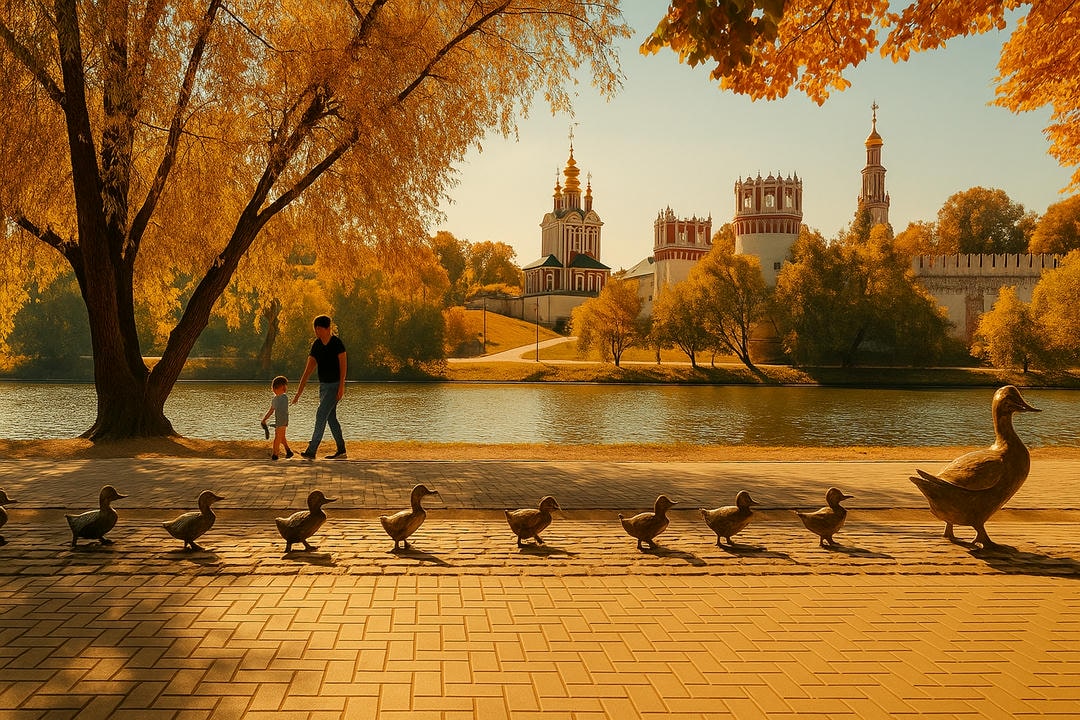
A remarkable sculptural composition featuring a duck accompanied by its ducklings stands as a meaningful emblem of friendship and cultural connection between the United States and Russia. Presented in 1991 as a gesture of goodwill, this sculpture symbolizes the enduring bonds formed during a significant time of mutual respect and understanding.
Located near the serene pond within the historic Novodevichy Convent’s park in Moscow, the artwork carries deep cultural symbolism that transcends borders. The tender depiction of the duck family evokes themes of nurturing, unity, and care—values that resonate universally and beautifully complement the sacred and peaceful surroundings of the monastery.
This sculpture serves as a lasting reminder of the power of friendship and collaboration across cultures. It highlights the spirit of harmony and shared humanity that continues to inspire and strengthen relationships. As an uplifting symbol, it invites visitors to reflect on kindness, connection, and the importance of preserving bonds between peoples.
The gift remains a treasured landmark in Novodevichy Convent’s park, celebrating the positive ties and mutual respect that enrich the cultural landscape of Russia today.
Life and Activities in the Active Monastery Today
Novodevichy Monastery, while rich in history, remains a lively center of spiritual life and monastic tradition. Today, it functions as an active nunnery under the guidance of an abbess and is home to about thirty dedicated novices.
The daily life within the monastery is shaped by a harmonious balance of prayer, meditation, and communal work, preserving traditions that have been upheld for centuries. Novices receive thorough training that blends spiritual growth with practical skills such as gardening, icon painting, and sewing. This careful balance fosters both inner faith and personal discipline.
In addition to its spiritual mission, the monastery extends its care beyond its walls by offering shelter and support to young mothers in need. This compassionate outreach highlights the monastery’s role as a place of hope and kindness, blending its rich historical legacy with meaningful social service.
A Lasting Legacy of Russian Heritage and Spirit
Novodevichy Monastery provides visitors with a profound experience of Russian heritage, culture, and spirituality. From its architectural beauty to its ongoing traditions, it stands as a proud symbol of Russia’s cultural strength and faith. For those seeking a deeper understanding of Russia’s heart and soul, Novodevichy offers valuable insights into a nation shaped by resilience, spirituality, and enduring pride.